
Best Time of Year to Pour Concrete in Sarasota, FL
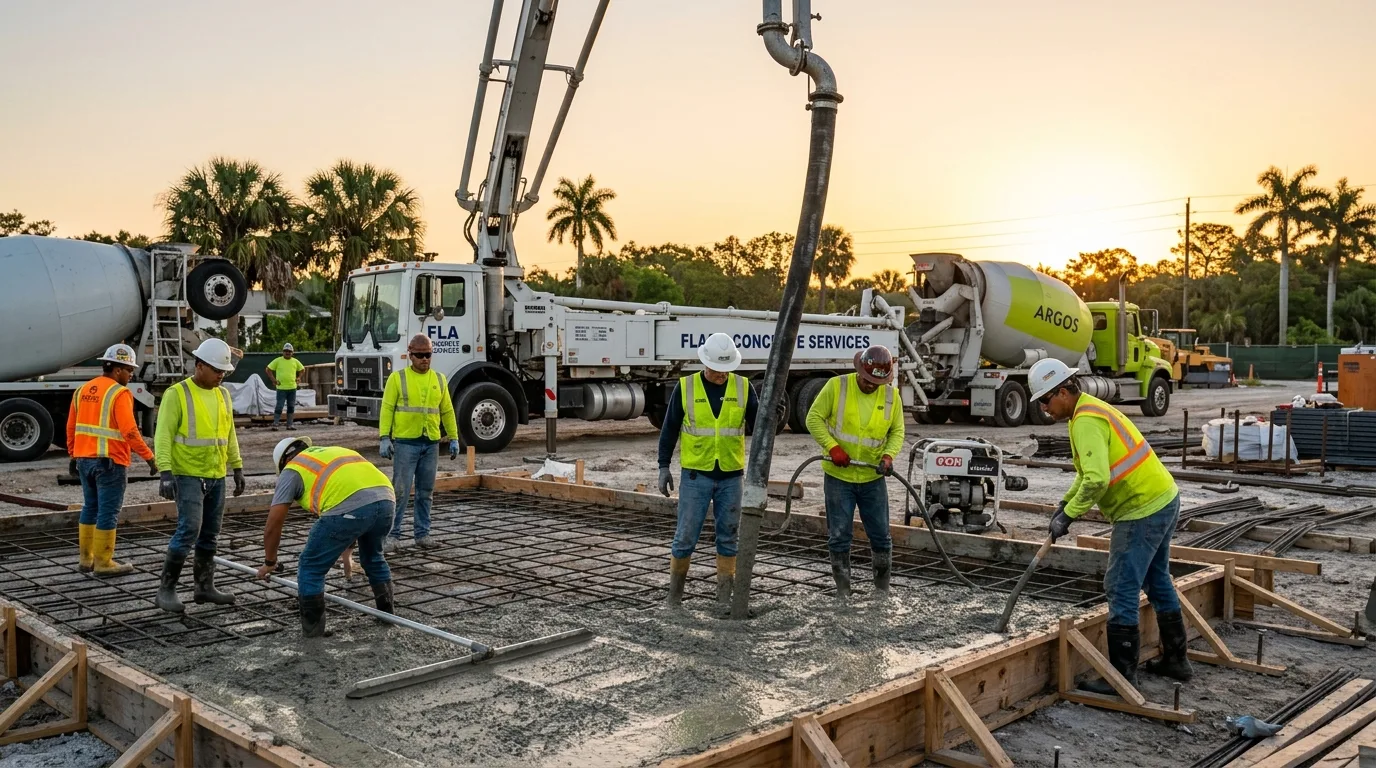
Your neighbors who had their concrete driveway poured last January look happy about it every time you talk to them — but you’re wondering if that’s really a practical window for your project, or if spring or fall would work just as well. Timing matters more for concrete in Sarasota than in most places, because the distance between ideal conditions and problematic ones is compressed into predictable seasonal patterns. In this post, we cover what drives timing decisions for concrete in Sarasota, which months are genuinely best, and what’s possible year-round for different project types.
Schedule Your Sarasota Concrete Project
We can book winter slots now — contact us to check availability for your concrete project.
Why Concrete Timing Matters for Sarasota Projects
Sarasota’s humid subtropical climate creates two distinct concrete seasons: the wet season (June–September) when afternoon thunderstorms and 75–80% average humidity make concrete work more complex, and the dry season (October–March) when humidity drops and temperatures stabilize in the ideal 60–80°F range for concrete curing.
The core issue is what humidity does to concrete. High ambient humidity during placement slows evaporation from the surface — which sounds beneficial, but it actually creates bleed water (excess mix water that rises to the surface during finishing). Finishers who don’t read this correctly can trap bleed water under the surface layer, causing dusting, scaling, and reduced surface strength that appears within the first year. High humidity also affects stamped and decorative concrete by compressing the stamping window and making color hardener application less predictable.
Month-by-Month Guide for Sarasota Concrete
October–November: Optimal. Humidity drops from summer peaks, afternoon storm frequency decreases, and temperatures are in the 70s during the day. Contractors typically have good availability in October as the summer rush ends. November starts to book quickly as snowbirds return and demand picks up.
December–January: Best window. Sarasota’s driest, most stable months. Low humidity, lows in the 50s (no frost concern), highs in the 70s. Morning dew can be a factor for early pours in January — allow time for forms and rebar to dry before placing concrete. Contractor schedules are typically full through January; book 4–6 weeks ahead.
February–March: Excellent. Spring humidity has not yet arrived. March can bring some early afternoon storms toward month-end, but overall conditions remain favorable. This is the peak season for decorative and stamped concrete work. Highly competitive for contractor scheduling — book in January for a March pour.
April: Good. Spring transition — temperatures warming into the low 80s, humidity beginning to climb. Still preferable to summer. Spring break demand can tighten contractor availability.
May: Marginal. Pre-rainy season — humidity rises noticeably and the risk of afternoon storms increases. Standard flatwork is manageable; stamped and decorative work is best wrapped up by early May or deferred to fall.
June–September: Challenging. Sarasota receives 60%+ of its annual rainfall in these four months. Afternoon thunderstorms are frequent and intense. Concrete work continues year-round in Sarasota — construction doesn’t stop — but requires experienced crews who can adapt mix designs, schedule early-morning pours, and respond to weather windows. Standard driveways and slabs are more manageable than decorative work. Expect some schedule flexibility requirements.
Practical Uses: What Project Type Changes the Timing Calculus
- Standard driveway pour: Can be done year-round with appropriate precautions. Summer pours work but benefit from early morning scheduling before the 2–4 PM storm window.
- Stamped concrete driveway or patio: Strongly prefer October–March. High humidity compresses the stamping window and makes color application less consistent. Don’t rush a decorative project into Sarasota’s wet season.
- Foundation/slab pour: Year-round, but large commercial pours benefit from dry-season scheduling when consecutive dry days are more reliable.
- Pool deck resurfacing: Ideal in dry season when the surface can be properly cleaned and dried before overlay application. Bonding is compromised by surface moisture.
- Concrete repair and crack sealing: Can be done year-round for small repairs. Major resurfacing overlays benefit from October–April conditions.
- Retaining wall footings: Prefer low-water-table season (winter) for excavation, especially near coastal areas of Sarasota County where groundwater levels vary significantly by season.
How Sarasota’s Seasonal Pricing Works
Concrete Sarasota contractors typically price consistently year-round, but 5–10% off-peak discounts are available from some contractors for winter scheduling — particularly in October and early November when post-summer schedule gaps exist. November through January is peak demand, so discounts rare during that window. The real cost advantage of summer scheduling is contractor availability: summer demand is lower for decorative work, so you may find better scheduling options even without a price break.
The hidden cost of bad timing is more significant than the discount is worth: a stamped concrete surface that blushes from trapped bleed water in a wet-season pour is an expensive outcome. For decorative projects, wait for the right conditions rather than chase a marginal price advantage.
Book Your Sarasota Concrete Project Early
Winter slots fill fast — contact Sarasota Concrete Company now to secure your date.
Frequently Asked Questions
What is the best month to pour a concrete driveway in Sarasota?
November through February consistently produces the best conditions for concrete driveway installation in Sarasota. The combination of low humidity, stable temperatures in the 70s, and minimal precipitation risk gives finishing crews the time they need and allows proper curing without the complications of Florida’s wet season. For standard broom-finish driveways, any dry week from October through April works well.
Can you pour concrete in the summer in Sarasota?
Yes — concrete contractors work through Sarasota’s wet season. Standard driveways, foundations, and slabs are regularly poured in summer with appropriate precautions: early morning pour times to avoid afternoon storms, lower water-cement ratio mixes to compensate for ambient humidity, curing compounds applied immediately after finishing, and weather monitoring to avoid rain in the 24–48 hours after a pour. Decorative and stamped concrete is technically possible but carries higher risk of surface defects.
Do concrete prices go up in winter in Sarasota?
Pricing stays relatively consistent year-round for standard work. Some contractors offer 5–10% off-peak incentives for October and early-November scheduling. November through January is peak demand due to snowbird season, so discounts are uncommon during that period. The better case for winter scheduling is quality: conditions produce better concrete outcomes than summer, particularly for decorative finishes.
Plan Your Sarasota Concrete Project Today
Sarasota Concrete Company serves all of Sarasota County — free estimates, honest timelines.
Related: