
Hurricane Season Concrete Prep: Protecting Your Sarasota Property
Concrete is one of the most hurricane-resistant materials in residential construction — but it’s not impervious to the conditions that accompany Sarasota storms. Extended flooding, storm surge on barrier island properties, debris impact, and the rapid drainage demands placed on concrete surfaces during multi-inch rain events all create specific risks and inspection priorities for Sarasota County homeowners. In this post, we cover what to inspect on your concrete before hurricane season, what post-storm damage looks like and why it happens, and when to call a concrete contractor after a storm.
Sarasota Concrete Inspection Before or After Hurricane Season?
We assess storm-related concrete damage throughout Sarasota County — contact us for a free post-storm evaluation.
Why Hurricane Season Matters for Sarasota Concrete
Sarasota County is in Florida’s primary hurricane impact zone — the Gulf Coast receives a disproportionate share of Atlantic basin hurricane landfalls. While concrete structures fare far better in storms than wood or metal, hurricane-related damage does occur, and storm season accelerates pre-existing concrete problems that were minor before the storm and significant after.
The specific risks to Sarasota concrete during hurricane season:
Flooding and sub-base saturation: Extended storm flooding saturates Sarasota County’s Myakka sand sub-base far beyond the normal wet-season pattern. Slabs that were already showing minor settlement cracks may experience accelerated movement when the sub-base spends 12–48 hours under storm water. Post-storm inspection of driveways and patios is warranted after any major storm event.
Storm surge on barrier islands: Siesta Key and Longboat Key properties in evacuation zones face storm surge that carries saltwater, debris, and high-velocity water flow across concrete surfaces. Salt contamination of concrete initiates the carbonation and chloride attack cycle that eventually reaches reinforcing steel, causing rust expansion and spalling. Post-surge cleaning and sealing are critical.
Debris impact: Storm debris — broken tree limbs, roof tiles, outdoor furniture — can impact concrete surfaces at high velocity during high-wind events. This creates surface gouges, edge chips, and in severe cases, through-cracks that require immediate attention to prevent water infiltration.
Types / Options: Pre-Hurricane Concrete Prep Steps
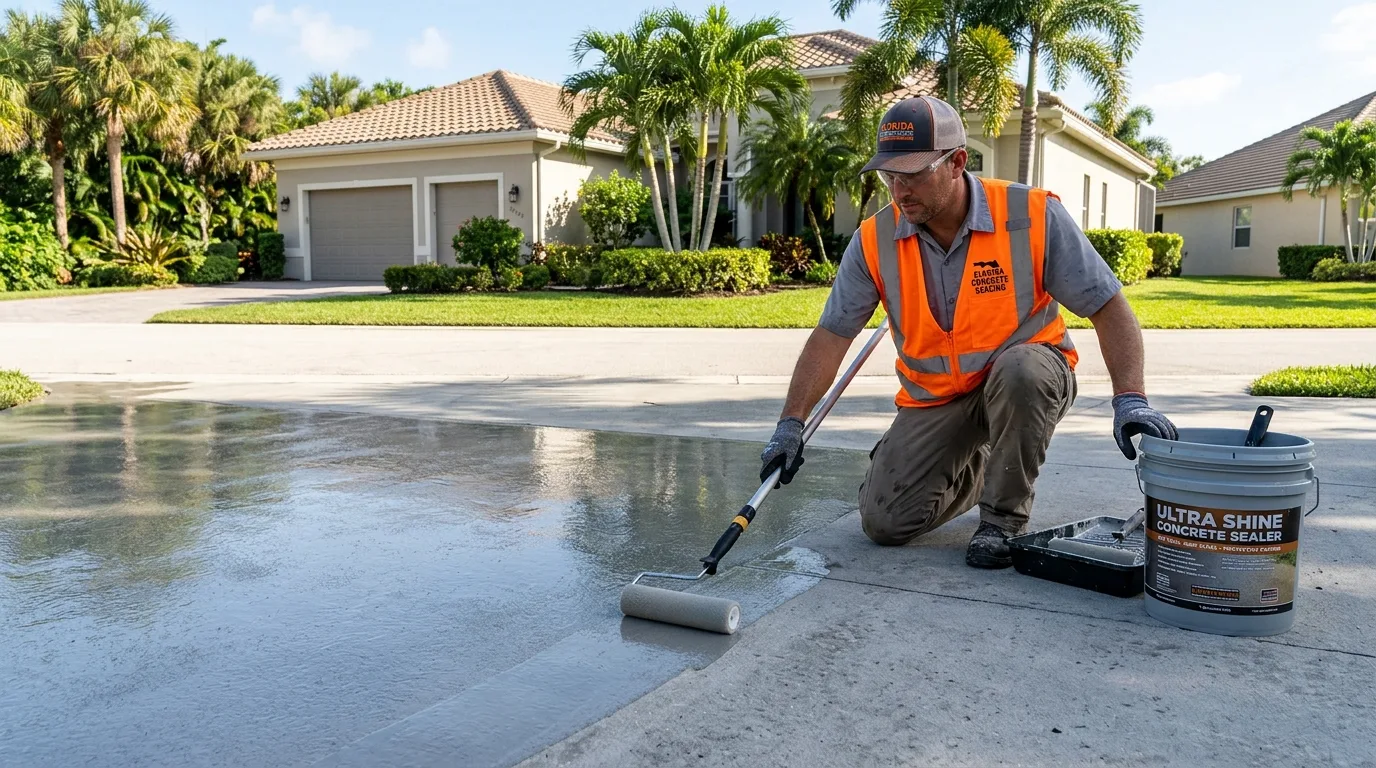
Sealing (most important): A fresh sealer coat applied before hurricane season is your primary defense. Sealed concrete resists saltwater infiltration, chemical attack from storm debris, and biological growth from extended storm flooding. If your concrete was last sealed more than 2 years ago, schedule sealing before June. This single step extends concrete life and reduces post-storm cleanup effort dramatically.
Joint inspection: Control joints and expansion joints that have opened, lost their caulk filler, or allowed weed growth are pathways for storm water to reach the sub-base. Fill open joints with polyurethane joint sealant before storm season.
Drainage verification: Walk the concrete Sarasota storm drainage paths during a regular rain shower to confirm water flows away from structures. Identify any areas where water pools or flow is uncertain. Storms deliver water at a rate that overwhelms poor drainage — fixing drainage problems before storm season is far easier than after.
Edge condition: The perimeter of concrete slabs is where storm water typically infiltrates first. Inspect for crumbling edges, exposed aggregate, or base material washing out at the edge. Address before storm season.
Practical Uses: Post-Storm Concrete Inspection Checklist for Sarasota
- New cracks or movement at existing cracks: Measure and photograph existing cracks before storm season. Compare post-storm. Growth or new differential height indicates sub-base movement from storm flooding.
- Drainage patterns changed: If water now pools where it didn’t before, or flows toward the foundation, storm flooding has altered the drainage grade — requires correction before the next storm.
- Surface contamination: Storm surge leaves salt residue on concrete. Wash with fresh water immediately after a storm surge event to reduce chloride exposure time. Follow with professional pressure washing and resealing.
- Debris impact damage: Surface gouges from debris impact can be repaired with polymer-modified mortar if the damage is surface-only. Through-cracks from impact require assessment for structural significance.
- Tree root exposure: Storms often wash away soil around tree bases, exposing roots and revealing root systems that may extend under your concrete. Root mapping after a storm is useful if you’re planning a driveway project.
- Foundation drainage: Check that downspouts are correctly directed away from the slab foundation. Storm events often displace downspout extensions, which then direct roof water toward the foundation.
- Flood zone properties (Siesta Key, Longboat Key): Inspect the flood venting in enclosed areas below BFE. Confirm flood vents weren’t damaged and continue to function as designed. Salt contamination from storm surge requires thorough fresh-water washing of all concrete surfaces.
How Sarasota’s FEMA Flood Maps Affect Post-Storm Repairs
Properties in FEMA Special Flood Hazard Areas in Sarasota County may face restrictions on post-storm concrete repairs that exceed a percentage of the structure’s pre-storm value — the “substantial improvement” provision. Repairs that constitute substantial improvement (typically over 50% of structure value) may trigger current flood zone construction requirements, including elevation requirements.
This is relevant for older barrier island properties where the existing foundation may not meet current BFE requirements. Before undertaking major post-storm foundation or slab work on Siesta Key or Longboat Key, confirm with Sarasota County Building Services whether the scope triggers substantial improvement provisions.
Post-Storm Concrete Assessment in Sarasota County
We assess storm damage and provide written repair recommendations for your Sarasota property — free evaluation.
Frequently Asked Questions
What concrete damage typically occurs after a hurricane in Sarasota?
The most common post-storm concrete damage in Sarasota County includes accelerated settlement cracking (from sub-base saturation), surface contamination from storm surge (salt and debris), debris impact damage, and drainage drainage failures revealed by the storm event. Foundation damage from direct storm surge impact is less common on inland properties but does occur on barrier island properties in Sarasota County.
Should I seal my concrete before hurricane season in Sarasota?
Yes — sealing concrete before hurricane season (before June) is the most effective preparation step for Sarasota County homeowners. A fresh sealer coat reduces water infiltration, salt penetration from potential storm surge, and post-storm biological growth. If your concrete was sealed within the last 2 years and the sealer is still intact, additional sealing before storm season is optional. Concrete that hasn’t been sealed in 3+ years should be sealed before June.
How do I know if my concrete foundation was damaged by a hurricane in Sarasota?
Post-storm foundation damage signs include: new diagonal cracks at door and window corners, doors that now stick or won’t close properly, tile grout cracking in patterns that suggest floor movement, and exterior concrete slab edges that have moved or settled. These symptoms often appear 1–3 months after the storm as the soil settles from the saturated state. If you see any of these signs after a major storm event, have a structural engineer evaluate before attempting repair.
Sarasota Concrete Company — Storm-Ready Concrete Care
Call (888) 376-0955 for pre-season sealing or post-storm damage assessment throughout Sarasota County.
Related: