
Maintaining Your Stamped Concrete Patio in Sarasota's Climate
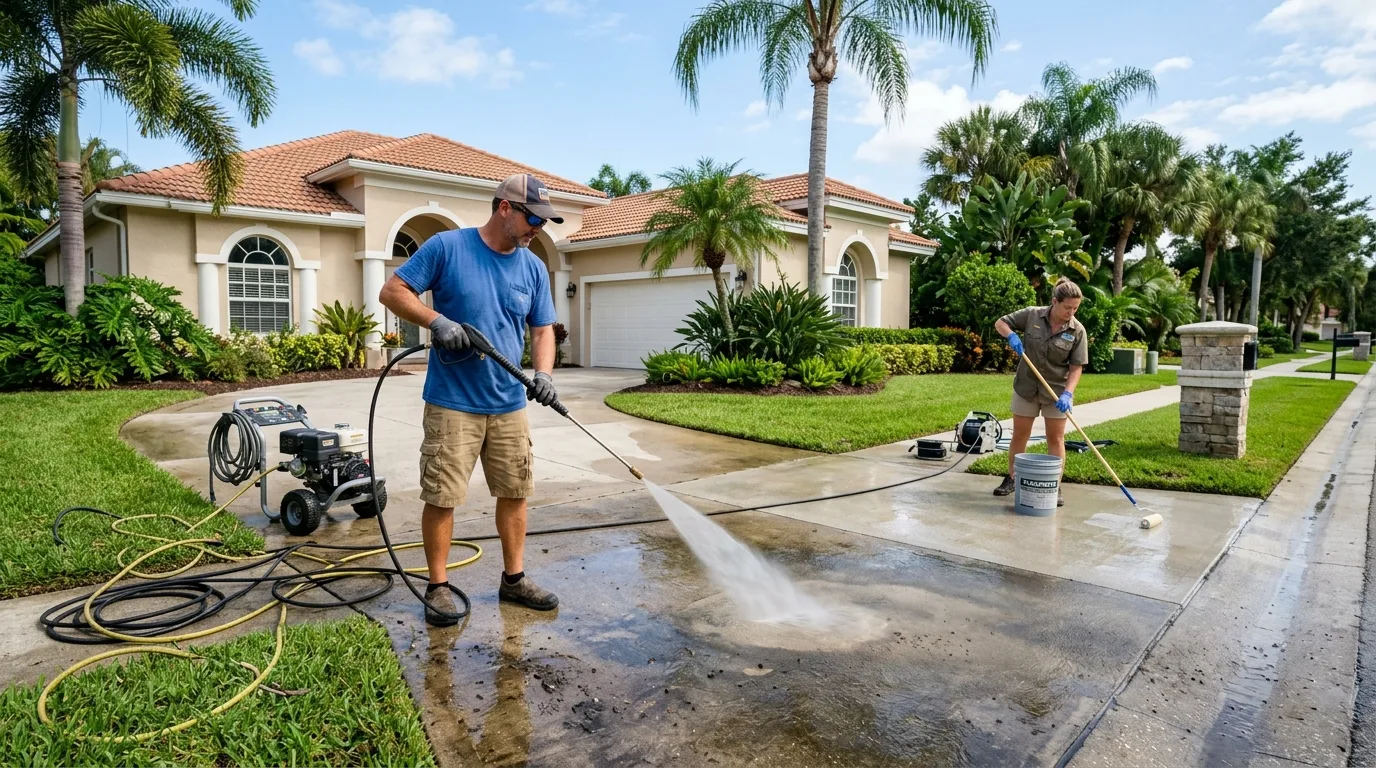
Stamped concrete is not a set-it-and-forget-it surface in Sarasota — it’s a surface that earns its 20–30 year lifespan through a maintenance routine matched to the demands of Southwest Florida’s climate. Homeowners who seal on schedule, manage biological growth, and handle small issues promptly extend their stamped concrete’s life significantly. Those who skip maintenance find that Sarasota’s combination of UV intensity, humidity, and coastal salt air degrades stamped surfaces faster than in any other US market outside of South Florida. In this post, we cover the specific maintenance actions that keep stamped concrete looking great and structurally sound in Sarasota.
Stamped Concrete Maintenance in Sarasota?
We provide resealing, cleaning, and restoration services for stamped concrete throughout Sarasota County.
Why Maintenance Matters More in Sarasota Than Most Places
Stamped concrete in Sarasota’s climate faces several compounding stressors simultaneously. UV radiation from near year-round sunshine degrades acrylic sealers within 2–3 years — significantly faster than in interior or northern climates where UV exposure is seasonal. Sarasota’s 75–80% average summer humidity promotes biological growth (algae, mold) on outdoor concrete surfaces, particularly in shaded areas. For coastal properties on Siesta Key and Longboat Key, salt air carries chloride that penetrates compromised sealers and initiates the concrete degradation cycle from the inside out.
The result: a stamped concrete surface in Sarasota needs more active maintenance than in most other markets — but the maintenance actions themselves are simple. The challenge is consistency, not complexity.
Types / Options: Maintenance Actions for Sarasota Stamped Concrete
Resealing (most critical, every 2–3 years): The sealer is the primary defense between Sarasota’s elements and your stamped concrete surface. For inland Sarasota County properties (Palmer Ranch, Lakewood Ranch, Downtown Sarasota), acrylic sealers are appropriate. For barrier island properties (Siesta Key, Longboat Key), penetrating silicone or epoxy-modified sealers provide significantly better resistance to salt-air degradation. Resealing is the single maintenance action that, if consistently done, extends stamped concrete life by 10–15 years.
Annual cleaning: Pressure washing at low to medium pressure (1,000–1,500 PSI) removes biological growth, organic debris, and surface contaminants before they stain permanently. In Sarasota’s humidity and warmth, algae growth on shaded patio areas begins within months of installation without sealing. Annual cleaning prevents growth from becoming embedded in the concrete surface.
Joint inspection and refilling: Control joints in stamped concrete patios should be inspected annually. Open or empty joints allow water to infiltrate the sub-base — the source of most stamped concrete structural failures in Sarasota. Fill with polyurethane joint sealant at any sign of opening.
Color restoration: UV fading of stamped concrete color hardeners is gradual and often noticed over years rather than months. When the color appears washed out but the sealer is still intact, color restoration with a penetrating concrete stain can refresh the appearance without full resealing. This is a less expensive option than full resealing when the issue is primarily cosmetic.
Practical Uses: Maintenance Schedule for Sarasota Stamped Concrete
- Every 2–3 years (non-coastal): Full pressure wash, allow 72+ hours to dry in Sarasota’s humidity, apply fresh acrylic sealer coat in two thin passes. This is the most impactful maintenance action.
- Every 1–2 years (coastal — Siesta Key, Longboat Key): Inspection of sealer integrity, spot resealing of areas where the sealer has failed, and full resealing every 2 years maximum. Salt air degrades acrylic sealers faster — coastal properties need more frequent inspection.
- Annually (all Sarasota stamped concrete): Pressure wash at low pressure to remove algae and organic growth. Inspect joint filler. Note any new cracks or settlement. Inspect surface sealer sheen — if the surface no longer beads water after cleaning, it’s time to reseal.
- After each Sarasota wet season (October): Inspect for any new damage from summer storm events. Look specifically for cracks at control joints that have widened, settlement differential at slab edges, and areas where water pooled during summer storms. Address before the next dry season pour schedule opens.
- Immediately: Address any crack wider than 1/8 inch with flexible crack sealant before the next rain. Cracks that allow water under the slab initiate the sub-base deterioration cycle that compounds every wet season.
- For pool-adjacent stamped concrete: Rinse with fresh water after heavy pool use to remove chlorine residue. Pool chemicals accelerate acrylic sealer degradation — regular rinsing extends sealer life on Sarasota pool-adjacent patio surfaces.
How Sarasota’s Seasonal Cycle Shapes the Maintenance Calendar
Concrete Sarasota stamped surfaces benefit from a maintenance calendar aligned with the local seasonal pattern rather than a generic annual schedule:
Best time to reseal: October–November, after summer storm season ends and before the busy winter season. Humidity has dropped from summer peaks, surfaces dry faster between cleaning and sealing, and temperatures are in the ideal range for sealer application (65–85°F). Scheduling resealing in October means completing before Sarasota’s busy winter season when contractor availability tightens.
Avoid resealing: June–September during Sarasota’s wet season. Surfaces can’t dry thoroughly enough for proper sealer adhesion between afternoon storms. Sealer applied to a damp surface blisters and peels within weeks, requiring reapplication. If your sealer is failing during summer, document it and schedule repairs for October.
Annual cleaning: March–April (end of dry season) removes the winter season’s pollen and organic debris before summer humidity creates optimal conditions for biological growth on any uncleaned surface.
Stamped Concrete Maintenance in Sarasota County?
We provide professional resealing, cleaning, and restoration throughout Sarasota. Call (888) 376-0955.
Frequently Asked Questions
How often should I reseal stamped concrete in Sarasota?
Every 2–3 years for inland Sarasota County properties; every 1–2 years for barrier island properties (Siesta Key, Longboat Key) where salt air accelerates sealer degradation. The simple test: pour water on your stamped concrete. If it beads up, the sealer is still working. If water absorbs into the surface without beading, it’s time to reseal. Never let Sarasota’s UV and humidity attack unsealed stamped concrete for a full dry season.
Why does my Sarasota stamped concrete look faded?
Fading in Sarasota stamped concrete has two common causes: sealer degradation (UV breaks down the acrylic that gives the surface its sheen and color protection) or color hardener UV fade (the actual pigment in the top layer has faded). Sealer degradation is more common and is addressed by resealing. True color hardener fade — where the pigment itself has lightened — is addressed with a penetrating concrete stain before resealing. A professional assessment can distinguish the cause.
Can I apply new sealer over existing sealer on my Sarasota patio?
Yes, if the existing sealer is still adhering to the surface and not peeling or blistering. If the old sealer is failing (bubbling, peeling, turning white), it must be removed by chemical stripper and pressure washing before applying a new coat. Applying new sealer over a failing old sealer traps moisture and creates a worse surface. When in doubt, have a professional assess before resealing.
Sarasota Stamped Concrete — Professional Maintenance
Sarasota Concrete Company provides resealing and restoration services throughout Sarasota County.
Related: